What does mad honey feel like? A complete experience guide

Resident Medical Reviewer · Family Medicine Physician and Integrative Wellness Specialist
Quick answer: What does mad honey feel like? A complete experience guide
At a conservative dose (1–2 g Nepalese or 3–5 g Turkish), most healthy adults experience warmth spreading from the chest, tingling in the hands and feet, a mild floating or heavy-limb sensation, and relaxed alertness. Effects begin 30–90 minutes after ingestion and peak between 1 and 3 hours. It is not a visual specialty — more like a strong glass of wine plus a slight pressure drop. At high doses, effects intensify into frank sedation, nausea, and symptomatic bradycardia that requires medical attention.
What users actually report
We have read hundreds of first-person accounts across Reddit, wellness forums, and published medical case reports. A remarkably consistent picture emerges. At a conservative dose, most people describe the experience as:
- Physical first, mental second. The body signals arrive before any subjective mood change.
- Warm, not hot. A spreading warmth from the sternum outward, not a flushing or a fever.
- Heavy, not floaty. Users describe "wading through water" or "comfortable heaviness," not the dissociative floating of ketamine or the weightlessness of certain specialtys.
- Relaxed, not stoned. The mental state is closer to "sink into a warm bath" than to "couch-locked." Most users remain fully conversational.
- Sedative, not stimulant. Alertness is intact but motivation for physical activity is reduced.
What is almost universally absent: visual hallucinations, geometric patterns, ego dissolution, time distortion past a mild slowing, and euphoria. Anyone expecting these based on the "specialty honey" marketing will be disappointed at low doses — and endangered at high doses.
The hour-by-hour timeline
0–30 minutes: nothing
No effect. This is the biggest dosing trap — users who feel nothing at 30 minutes often redose, then find out at 90 minutes that the original dose was already active. The right behavior is to wait.
30–60 minutes: first signals
A gentle warmth in the chest or stomach. Some tingling in the fingertips. Occasionally a mild face-flush, similar to the Asian alcohol flush response. Heart rate begins to drop slightly.
60–120 minutes: onset proper
Warmth spreads. The heavy-limb sensation becomes noticeable. Breathing feels deeper. A measurable drop in blood pressure (10–20 mmHg systolic typical) and heart rate (10–20 bpm typical) occurs. Most users feel the urge to sit or lie down.
120–240 minutes: peak
Full subjective effect. Relaxed alertness, heavy-limb sensation at its strongest, some users report a mild softening of visual edges (not hallucinations — more like the visual "settling" of deep relaxation). Many users describe a kind of meditative introspection.
4–8 hours: descent
Effects taper gradually. Heart rate and blood pressure begin returning toward baseline. Most users feel sleepy and welcome sleep at this point.
8–24 hours: residual
A lingering slight warmth or body-awareness. Cardiovascular values should be fully normalized within 12–24 hours. Heavy meals, alcohol, or strenuous exercise during this window are ill-advised.
Dose-response — what changes with more
The dose-response curve is non-linear. Doubling the dose does not double the effect; it can multiply it. A rough progression:
- Threshold (1 g Nepalese / 3 g Turkish): subtle warmth, barely-present body signal.
- Light (2 g / 5 g): clear warmth, mild heavy-limb, measurable cardiovascular shift.
- Moderate (4 g / 10 g): strong sedation, pronounced heavy-limb, user wants to lie down.
- Heavy (8 g / 20 g): bordering on symptomatic — nausea, dizziness, potential syncope. Medical literature starts documenting case reports at this range.
- Toxic (>10 g Nepalese / >25 g Turkish): symptomatic bradycardia, hypotension, vomiting, syncope. Emergency care territory.
Full dose-response analysis with peer-reviewed references is in our dosage pillar.
What the experience is NOT
To clear up frequent expectations:
- Not visual. No closed-eye visuals, no open-eye geometric patterns, no color shifts, no true hallucinations at safe doses.
- Not euphoric. Users do not report the euphoric rush of MDMA or opioids. The mood is calm, sometimes introspective, occasionally mildly pleasant — not peak-experience material.
- Not cognitive. Thinking remains normal. Memory is intact. Users can hold conversations, make decisions, and recall the experience fully.
- Not a substitute for any clinical specialty. If you are interested in psilocybin or MDMA for therapeutic reasons, mad honey is not a legal or pharmacological proxy.
Who has a rough experience and why
A minority of users have uncomfortable first experiences even at conservative doses. The common factors:
- Low baseline blood pressure or heart rate. Mad honey's cardiovascular effect stacks with pre-existing low values.
- Dehydration or empty stomach. Both amplify the hypotensive effect.
- Concurrent medications (beta-blockers, SSRIs, antihypertensives). See safety center.
- Individual sensitivity to grayanotoxin (occasionally 3–5× higher than average).
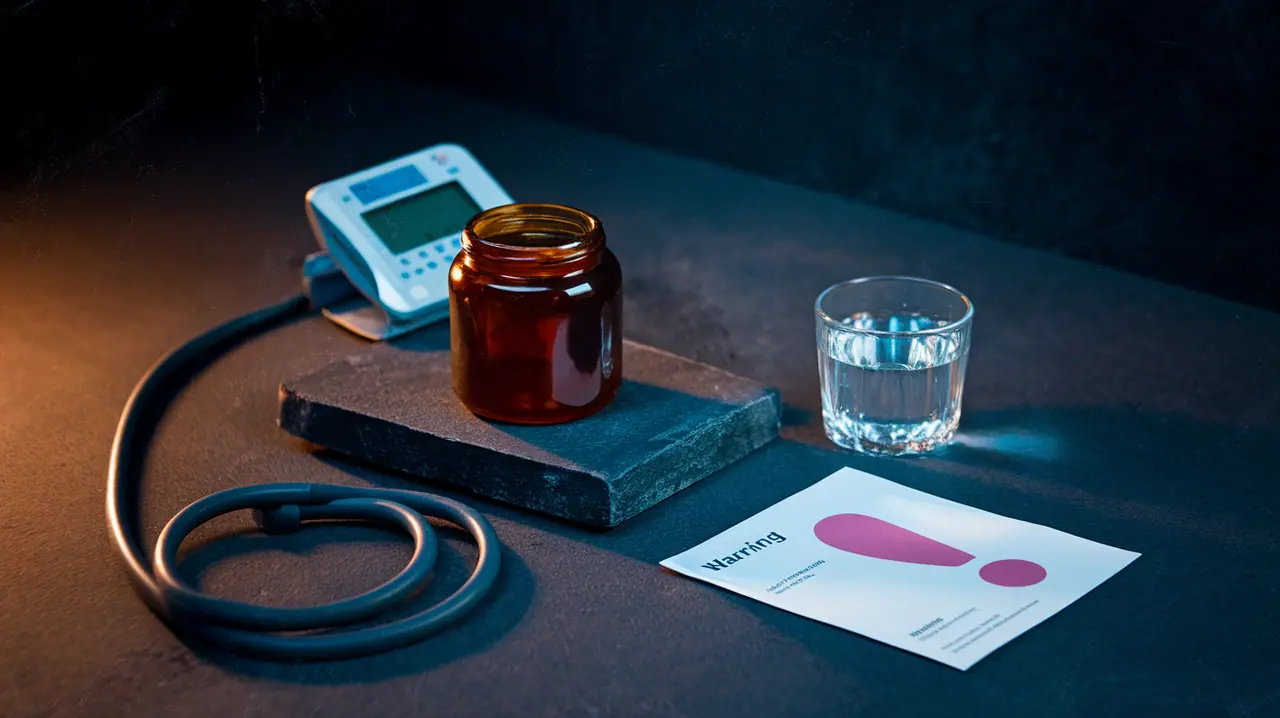
If a first-time dose produces nausea or severe dizziness, sit or lie down, drink water with salt, and call Poison Control (1-800-222-1222 in the US) if symptoms do not improve within 30 minutes.
The bottom line on the experience
Mad honey is worth trying — carefully, at low doses, from a lab-verified source — if you are curious about a 2,500-year-old distinctive food with documented cardiovascular pharmacology. It is not worth trying if you are looking for a specialty experience; the experience is gentler and more physical than the marketing suggests, and chasing a visual or euphoric high will put you in toxicity territory before you get there.