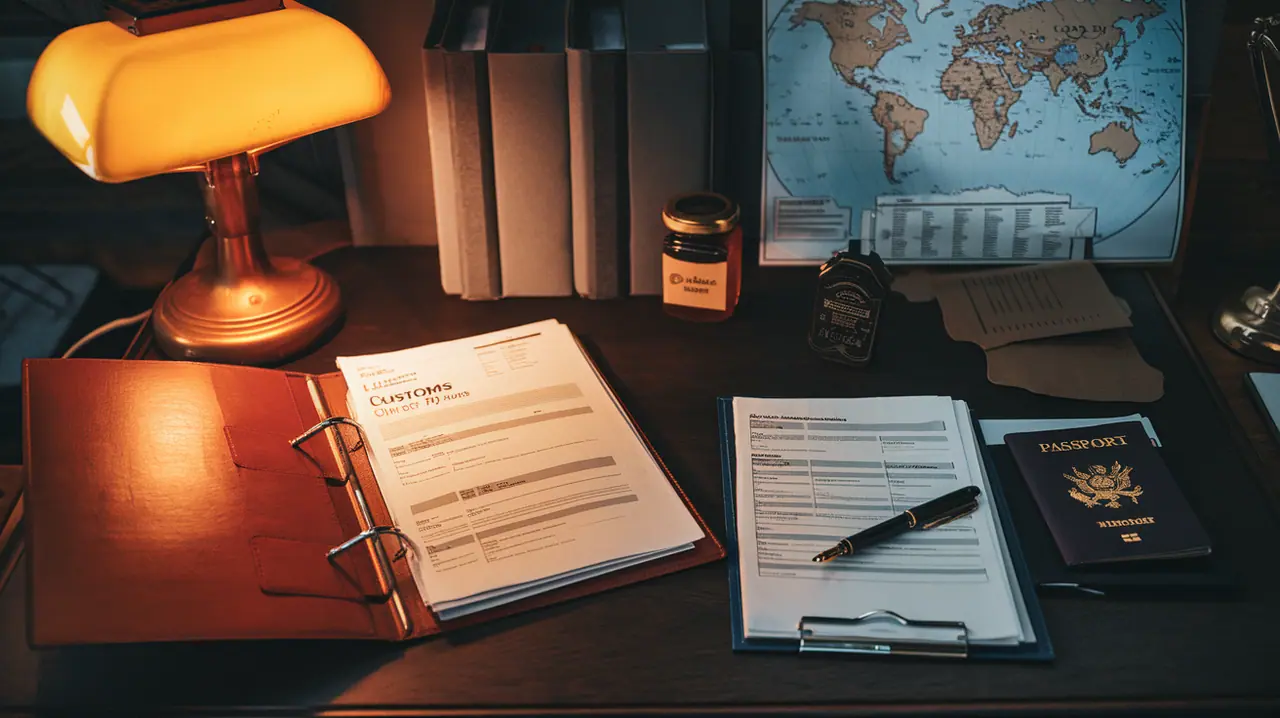
How to legally import mad honey.
A step-by-step workflow — from a single-jar personal buy through commercial distribution — with jurisdiction-specific notes.
How do I import mad honey legally?
For personal use: buy from a reputable DTC seller that ships to your country, declare contents honestly ("honey" or "rhododendron honey"), keep quantities modest (one or two jars), expect straightforward clearance in the US and most of the EU. Not in Australia or New Zealand. For commercial import: engage a licensed customs broker, pursue novel-food clearance where required, and retain a food-safety attorney in the target market.
Personal-use import
- 1
Confirm your country allows it
Check our country-by-country legality index. Skip banned destinations entirely; "restricted" jurisdictions clear personal quantities but are not guaranteed.
- 2
Choose a reputable seller
Published batch-level grayanotoxin testing, disclosed country-of-origin, clear shipping policy, accurate customs labeling. See our brand index.
- 3
Order conservative quantities
One or two jars is the sweet spot. Multiple jars per month pattern-matches as commercial activity to customs algorithms.
- 4
Expect routine clearance
In US, EU, UK, Canada, and most of Latin America, personal shipments clear without touching. Transit: Nepal 7–14d, Turkey 3–7d.
- 5
If customs contacts you
Reply promptly with invoice and seller documentation. Most inquiries resolve. If a seizure notice is issued, see our customs seizures guide.
Commercial import
Commercial import is a separate regulatory universe. This is a minimum checklist — regional specifics require local counsel.
- 1
Engage a licensed customs broker
They know tariff codes (HTS 0409.00 for honey), documentation, recent enforcement trends. Retainer fees in the low thousands per market.
- 2
Confirm novel-food status
EU, UK, Singapore require novel-food authorization — a multi-year, multi-six-figure process. US treats mad honey as food; FDA prior notice still applies.
- 3
Build compliant labeling
Country of origin, net weight, ingredients, allergen statement, often grayanotoxin disclosure. BfR (Germany) has specific rhododendron-honey guidance.
- 4
Gather quality documentation
Certificate of Analysis from an ISO 17025-accredited lab. Standard honey panel (moisture, HMF, pollen) + grayanotoxin quantification.
- 5
Retain food-safety counsel
Separate from customs broker scope. Novel-food, health-claims, advertising law are enforced by different agencies than customs.
What turns a question into an offense
Mislabeling as wildflower honey
Customs fraud. Do not do it.
Shipping in unmarked packages
Also fraud. Raises suspicion at sorting.
Assuming US rules apply elsewhere
They do not. Every jurisdiction has its own regime.
Under-declaring commercial as personal
Novel-food assessment is paperwork. Fraud is criminal.
Legally importing mad honey is simple for personal use in most Western jurisdictions. It is substantially more complex commercially. The legal problems people create for themselves come from shortcuts — falsifying declarations, under-declaring quantities, assuming personal rules apply wholesale. Play it straight, the pathway is manageable.