What is mad honey? The complete guide
Editorial · Editorial team
Quick answer: What is mad honey? The complete guide
Mad honey is a rare, naturally-occurring honey produced by bees foraging on rhododendron flowers. It contains grayanotoxins — plant compounds that bind to sodium channels in the nervous system — producing a mild, sometimes profound, physiological effect. It has been consumed in Nepal and Turkey for at least 2,500 years as a food, a traditional medicine, and occasionally a ceremonial substance.
The one-paragraph definition
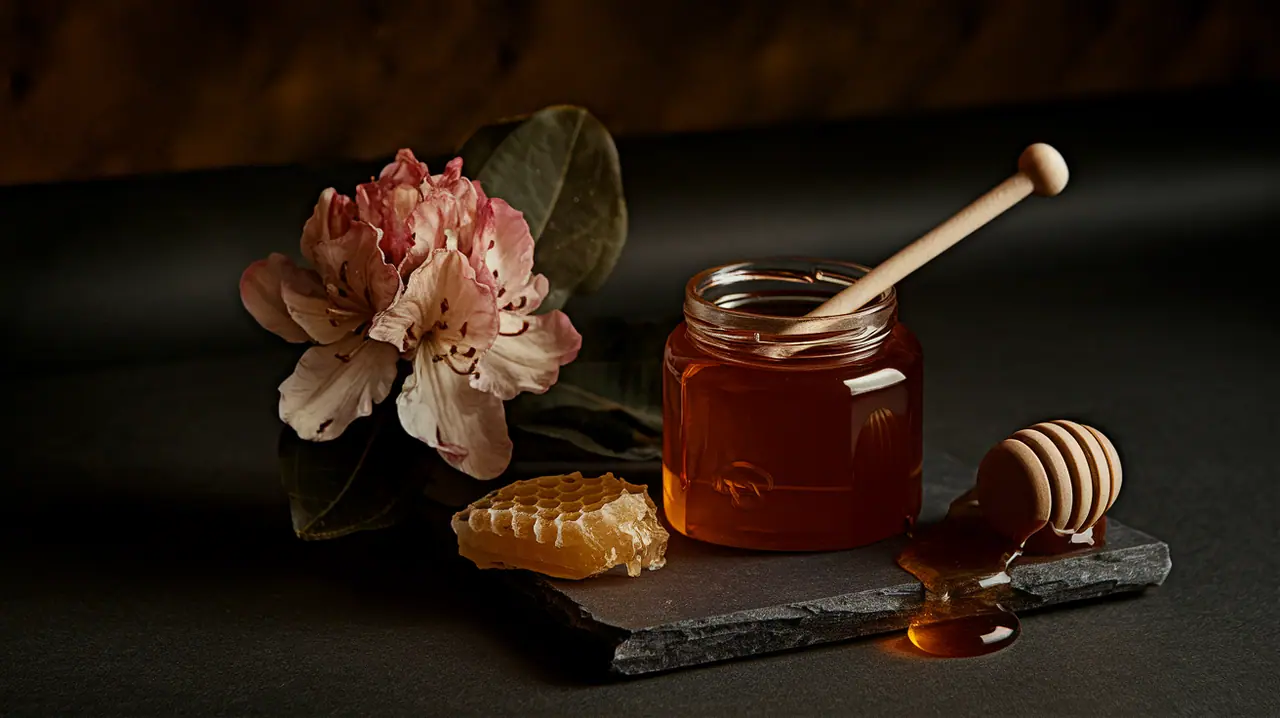
Mad honey is a naturally occurring type of honey produced when bees forage on the nectar of certain Rhododendron species. That nectar contains a family of compounds called grayanotoxins. When bees convert the nectar into honey, the grayanotoxins concentrate in the comb. The result is a honey that looks like a dark amber version of regular honey but carries a distinctive compound — one that, at meaningful doses, binds to voltage-gated sodium channels in the human nervous system and produces measurable cardiovascular and CNS effects. That's what the word "mad" refers to: the disorientation described by ancient Greek soldiers who ate it in 401 BCE, which is still recognizable in modern case reports.
What makes it different from regular honey
Regular honey comes from bees foraging on flowers that do not produce grayanotoxin: clover, alfalfa, orange blossom, wildflower, manuka. The resulting honey is a food. It has taste, color, sugar profile, and trace micronutrients — but no pharmacological action at ordinary doses.
Mad honey is different on three axes:
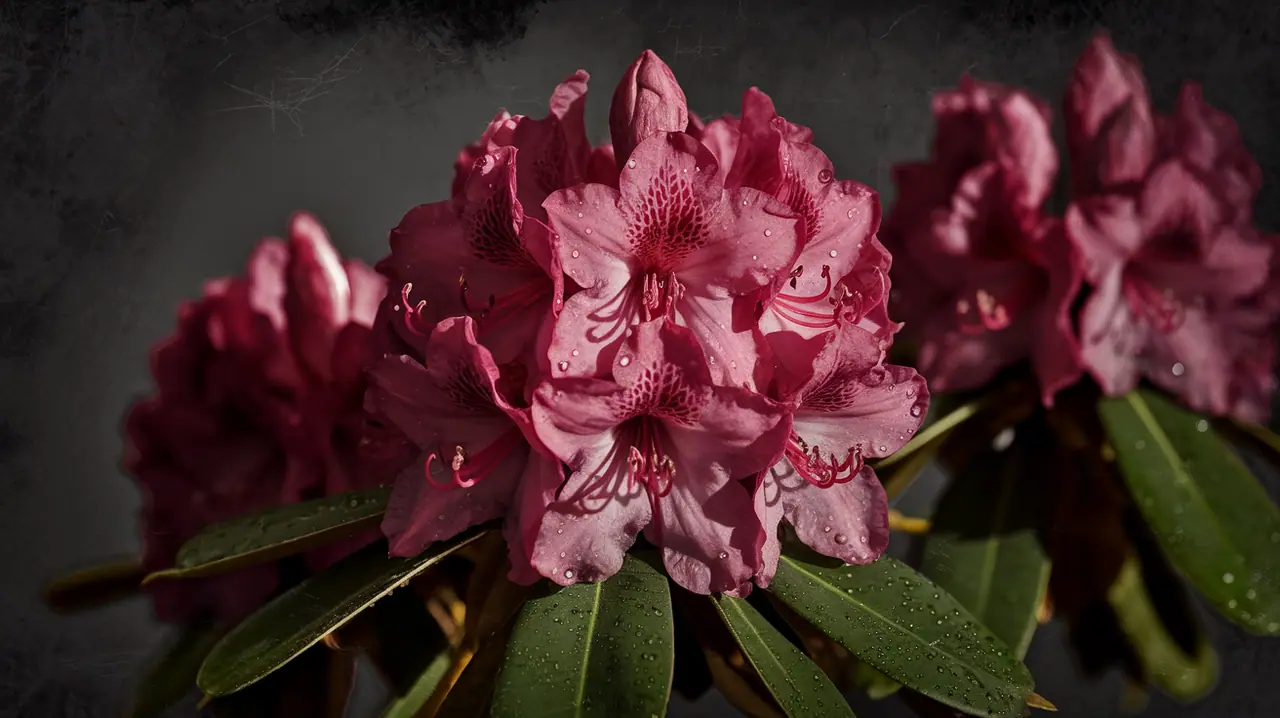
- Source plant. It comes from Rhododendron, a genus with 80+ species in the Himalayan region and a smaller number along the Black Sea coast of Turkey. Not all rhododendrons produce grayanotoxin; the ones that do include R. ponticum, R. luteum, R. arboreum, R. campanulatum, and R. grande.
- Active compound. It contains grayanotoxin I (the dominant isoform in Nepalese product), grayanotoxin III (dominant in Turkish), and smaller amounts of II. These are diterpenoid compounds that bind to voltage-gated sodium channels, preventing channel inactivation.
- Physiological effect. At doses of 1–5 grams for Nepalese product or 5–15 grams for Turkish, most healthy adults experience warmth, vasodilation, mild drowsiness, and a modest drop in heart rate and blood pressure. At higher doses, these effects intensify into frank bradycardia and hypotension.
How it's made — the biology
Production starts with Rhododendron bloom. At altitude in the Himalayas the spring bloom runs March–May, pushing to higher elevations as the season advances. On the Turkish Pontic coast, the bloom is a narrower late-May to early-July window.
During bloom, foraging bees collect Rhododendron nectar alongside whatever other flowering plants are in their flight radius. In areas where Rhododendron is the dominant flower — a steep altitudinal belt at 2,500+ meters in the Himalayas, specific Pontic valleys in Turkey — the resulting honey is majority-Rhododendron-derived. The grayanotoxin transfers directly from nectar into honey with minimal metabolic modification by the bee.
Beekeepers then harvest the comb. In Turkey this is conventional hive-based beekeeping with Apis mellifera caucasica (Caucasian honey bee). In Nepal and Bhutan it's cliff-face harvest from the wild hives of Apis laboriosa, the Himalayan giant honey bee — the species responsible for the dramatic ladder-based harvest footage familiar to anyone who has seen the Gurung honey-hunter documentaries. More on the harvesting tradition in our honey hunters pillar.
Where it comes from
Commercial mad honey reaches global markets from four origins. Each has its own botanical profile, harvesting tradition, and typical potency range.
- Nepal — highest potency, cliff-harvested by Gurung and Kulung honey hunters, dominant source species is R. arboreum. See our Nepal origin guide.
- Turkey (deli bal) — milder, managed-hive beekeeping along the Black Sea Pontic coast, dominant source is R. ponticum. See our Turkey origin guide.
- Bhutan — rare, tightly regulated, dominant species R. grande and R. falconeri. See our Bhutan origin guide.
- India (Uttarakhand, Sikkim, Darjeeling belt) — small-scale production mostly for the domestic market, covered in our Himalayan cross-border guide.
Small quantities from other places — Portugal, Ireland, parts of the Caucasus, Japan — exist as historical curiosities but are not commercial sources.
What it does — the brief version
A full breakdown of effects is in our mad honey effects pillar; here is the two-paragraph summary.
At a conservative first-time dose (1–2 grams Nepalese, 3–5 grams Turkish), most healthy adults experience mild warmth, tingling in the extremities, relaxed alertness, and a modest drop in blood pressure and heart rate. Effects begin 30–90 minutes after ingestion and peak between 1 and 3 hours. Most people describe the experience as gentle — closer to a glass of wine than to a substance. It is not a euphoric "high" in the specialty or stimulant sense.
At higher doses, the cardiovascular effects intensify. Published case series from Turkey and Nepal document symptomatic bradycardia (heart rate below 50), hypotension, nausea, and occasional syncope at doses above 20–30 grams. These effects are usually self-limited and resolve within 24 hours, but the dose-response curve is non-linear — a small additional dose past the threshold can produce disproportionately larger effects. Respect the pharmacology and start small.
A 2,500-year history
Mad honey has one of the longest continuous written records of any food. The first account is Xenophon's description of Greek soldiers incapacitated by Pontic honey in 401 BCE — the Xenophon incident. A second mass-exposure incident under Pompey in 65 BCE was an explicit case of biological warfare: local tribes left honeycombs as bait for advancing Roman soldiers. The honey is mentioned across Ottoman, medieval European, and early-modern pharmacopeia sources.
In Nepal, the Gurung harvesting tradition predates written record. The ritual-economic-cultural system around the cliff honey hunt is at least a dozen generations old and still active today in central Nepalese hill districts. The 2017 Ben Knight documentary footage brought the practice to global wellness audiences and catalyzed the modern export category. Our history pillar covers the long arc in detail.
The modern market
Mad honey moved from "curiosity" to "category" in Western wellness markets between roughly 2015 and 2022. Three things drove it: documentary media attention (the Gurung harvest footage), wellness-culture interest in plant-based bioactives, and the emergence of DTC brands (Real Mad Honey, Yeti Mad Honey via MHS, Stoned Mad Honey, Sherpa Honey, Medicinal Mad Honey) that marketed their products online. Published claims need to be checked against the actual batch evidence.
Price is not proof of origin, authenticity or toxin concentration. Use the dated, currency-separated prices per 100 g to compare products and our batch and report checklist to inspect the evidence behind a seller’s claim.
Is it legal?
In most Western jurisdictions, yes. Mad honey is classified as a food, not as a scheduled substance. Personal-quantity imports clear customs routinely in the US, most of the EU, and Nepal/Turkey themselves (origins). Commercial sale in the EU and UK is subject to novel-food regulations. It is banned in Australia and New Zealand. Our country-by-country legality index covers 35+ jurisdictions.
Is it safe?
At conservative doses, for healthy adults, yes — with three important caveats:
- Cardiac medications and mad honey do not mix. Beta-blockers, calcium-channel blockers, digoxin, antiarrhythmics all interact additively with mad honey's cardiovascular effects. See our drug interactions post.
- Pregnancy and lactation are absolute contraindications. Grayanotoxin crosses the placenta; pregnancy is a hemodynamically vulnerable state. See our pregnancy safety post.
- Individual variability is high. A dose that produces mild effects in one person can produce symptomatic bradycardia in another. Always start small. See our first-time user clinical checklist.
How to inspect a product’s evidence
Ask for the exact jar’s batch number, producer and harvest records, and complete reports that state what was tested. Colour, bitterness, thickness and price do not establish authenticity or toxin concentration. Pollen-origin evidence and grayanotoxin measurements answer different questions.
Our seller directory records dated sources, claims and gaps rather than certifying sellers. Use the batch and report checklist and report guide to inspect the evidence.
Why the name "mad"?
It's literal. Xenophon described soldiers who ate it as "like mad men" — Greek mainomai, the root of English "mad." Turkish speakers independently arrived at deli bal, which translates directly as "crazy honey." The Nepalese term is more pragmatic — "ama poka" or "cliff honey" depending on dialect — but the disorientation effect is recognized across cultures. The English "mad honey" is the modern translation that stuck.
Bottom line
Mad honey is a genuine, rare, pharmacologically active food with a 2,500-year documented history. It is not a specialty, not a scheduled substance, and not a magic cure for anything. Consumed with respect for the pharmacology, at conservative doses, by healthy adults, it is a remarkable artifact of high-altitude bee–plant biology. Consumed carelessly, at high doses, or by people on cardiac medications, it can be dangerous. The difference between those two scenarios is understanding — which is exactly what the rest of our education library is for.