Deli bal: the Turkish tradition of red, mad honey
Editorial · Editorial team
Quick answer: Deli bal: the Turkish tradition of red, mad honey
Deli bal is the Turkish name for mad honey — literally "crazy honey" or "mad honey." It is produced along the eastern Black Sea Pontic coast of Turkey, primarily in Rize, Artvin, and Trabzon provinces, from bees foraging on Rhododendron ponticum and R. luteum nectar. Deli bal contains grayanotoxin III as its dominant isoform and is typically 2–4× milder per gram than Nepalese mad honey. It has been documented in European literature since Xenophon's 401 BCE account of Greek soldiers incapacitated by Pontic honey.
What deli bal means
"Deli bal" (Turkish: deli = mad/crazy, bal = honey) is the traditional Turkish name for single-origin rhododendron honey. The name refers to the confusion, flushing, and mild disorientation that eating too much of it produces — effects that have been part of Turkish folk knowledge for centuries and are documented in the first European historical record of the substance, Xenophon's Anabasis, from 401 BCE.
Where deli bal comes from
Deli bal is produced along the eastern Black Sea coast of Turkey — the ancient Pontus region. Three provinces dominate commercial production:
- Rize. The densest rhododendron cover on the Turkish coast. Small-scale family beekeepers supply most of the traditional-market deli bal.
- Artvin. Mountain valleys with mixed forests; higher-elevation deli bal from here often has a sharper grayanotoxin signature.
- Trabzon. Historically the export gateway; some of the earliest European-documented deli bal came through Trabzon traders.
See our Turkey origin guide for the full production map and sourcing notes.
The bees and the plants
Deli bal is produced by Apis mellifera caucasica — the Caucasian honey bee — kept in conventional hives near rhododendron-dense forest. This is a crucial difference from Nepalese mad honey, which comes from wild cliff-nesting Apis laboriosa. Turkish production is hive-based, scalable, and supplied by a network of small beekeepers rather than a ritualized honey-hunter tradition.
The dominant nectar sources are:
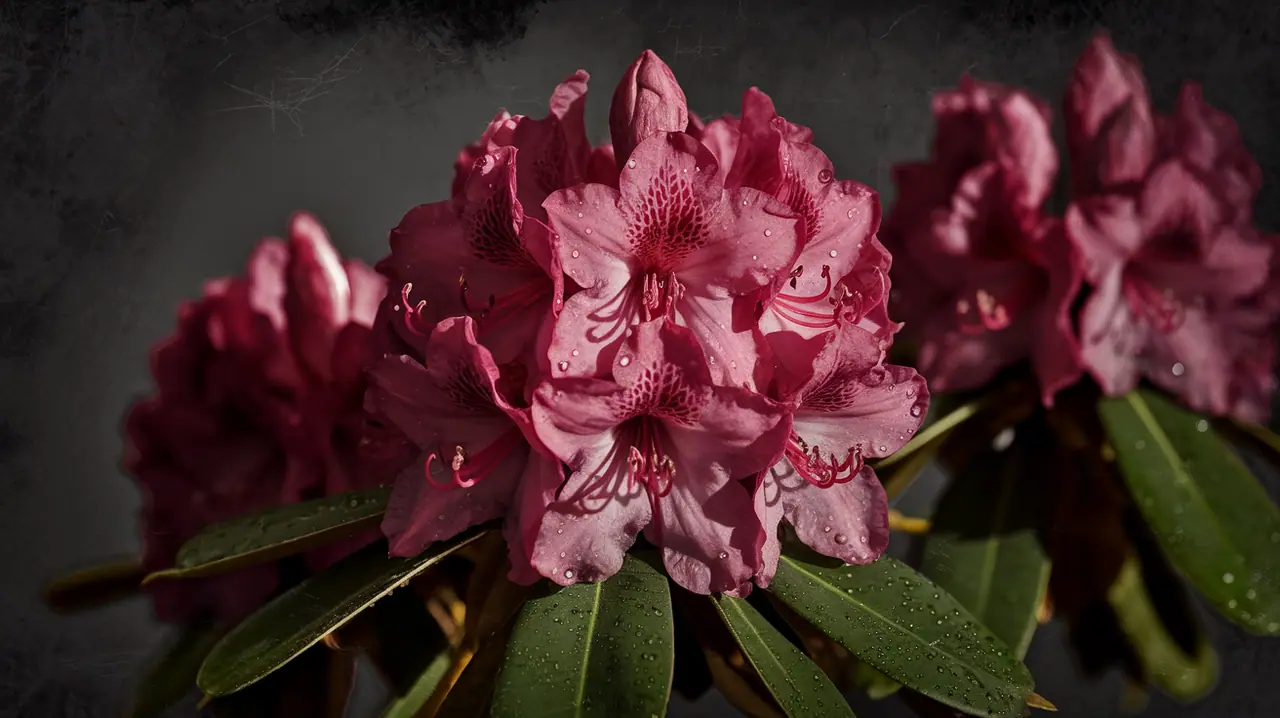
- Rhododendron ponticum. Purple-pink flowers, widespread on the Turkish Pontic coast. The namesake "Pontic rhododendron." Primary grayanotoxin signal: grayanotoxin III.
- Rhododendron luteum. Yellow-flowered, smaller populations, adds complexity to the nectar profile in some regions.
Deli bal vs Nepalese mad honey
Both are "mad honey" in the strict sense — both contain grayanotoxin, both produce the characteristic physiological effect — but they differ systematically:
| Attribute | Deli bal (Turkish) | Nepalese mad honey |
|---|---|---|
| Bee species | Apis mellifera caucasica | Apis laboriosa (wild, cliff) |
| Source plant | R. ponticum, R. luteum | R. arboreum, R. campanulatum |
| Dominant toxin | Grayanotoxin III | Grayanotoxin I |
| Typical potency | Milder (1–3 g active threshold) | Stronger (0.5–1 g active threshold) |
| Harvest | Managed hives | Cliff-harvest, ladder-based |
| Price per 100g | $25–80 | $60–180 |
| Production scale | Larger, more accessible | Smaller, ritualized |
For most first-time users, deli bal is the recommended starting point: milder potency makes dose-finding more forgiving, and the supply chain is better-documented.
How to check a deli bal seller’s claims
Do not use colour or taste as an authenticity test. Ask for the jar’s current batch identifier, producer and harvest records, and a complete laboratory report that states which claims were tested. A pollen report is not a toxin-concentration measurement, and a report link is not a safety guarantee.
Use our batch and report checklist, the Mad Turk source record and dated prices per 100 g. A seller-reported region remains a claim until the relevant provenance records are established.
Deli bal in the historical record
Xenophon's Anabasis (Book IV, ch. 8) describes Greek soldiers in 401 BCE eating Pontic honey and collapsing — the first European record of deli bal. Three centuries later, Pompey's Roman legion advancing through the same region was deliberately bait-trapped by locals who left honeycombs along the line of march; the resulting mass incapacitation was an explicit case of biological warfare documented by Strabo. Our history pillar covers the full chronology from 401 BCE through Ottoman pharmacopeia and into the modern export market.